Essential System Design: HTTP, Nginx, Performance, and Network Debugging

Essential System Design: HTTP, Nginx, Performance, and Network Debugging

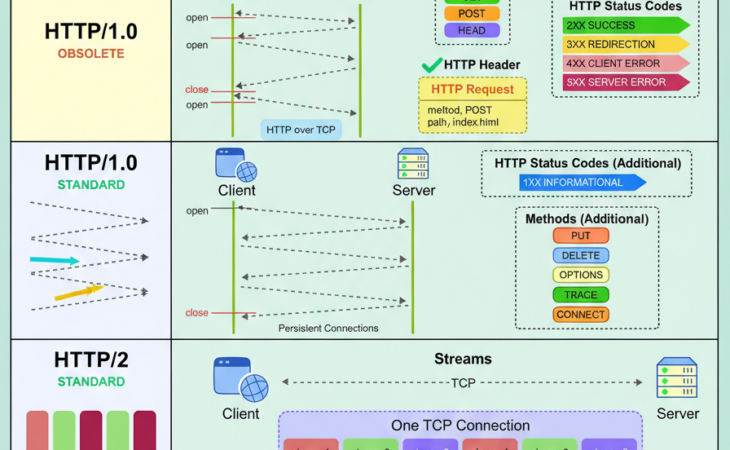
Evolution of HTTP The Hypertext Transfer Protocol (HTTP) has undergone significant evolution to address the demands of contemporary applications, transitioning from basic text delivery to facilitating high-performance, real-time user experiences. Its progression through various versions is outlined as follows: HTTP/0.9: Built to fetch simple HTML documents with a single GET request. HTTP/1.0: Added headers and

Read More
OpenAI’s PostgreSQL Scaling: Powering 800M ChatGPT Users at Scale

OpenAI’s PostgreSQL Scaling: Powering 800M ChatGPT Users at Scale

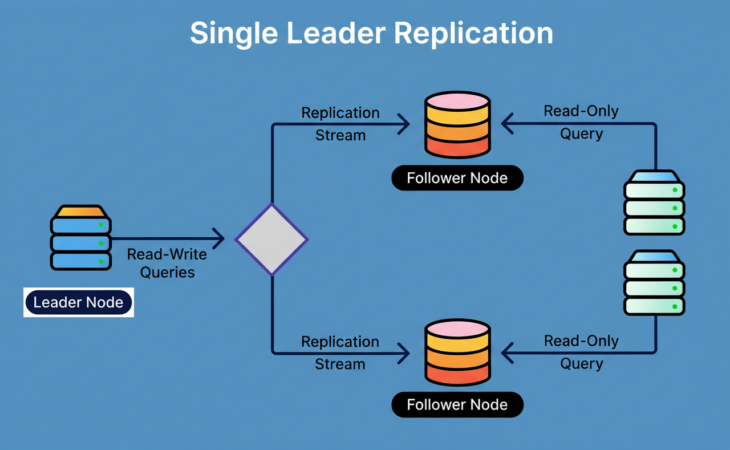
OpenAI successfully scaled PostgreSQL to manage millions of queries per second, supporting 800 million ChatGPT users. This achievement was accomplished with a single primary writer, complemented by numerous read replicas. Initially, such a feat might appear unfeasible. Conventional wisdom often dictates sharding a database beyond a certain scale to prevent system failure. The standard approach

Read More
Decoding Multimodal LLMs: Architecture and Unified Representation

Decoding Multimodal LLMs: Architecture and Unified Representation

For an extended period, artificial intelligence systems operated as specialists, each confined to a single sensory modality. For instance, computer vision models could identify objects within photographs but lacked the capacity to describe their observations. Natural language processing systems were capable of generating eloquent prose yet remained unable to interpret images. Similarly, audio processing models

Read More
LLM Context Protocols, AI Agent Skills & Deployment Strategies Explained

LLM Context Protocols, AI Agent Skills & Deployment Strategies Explained

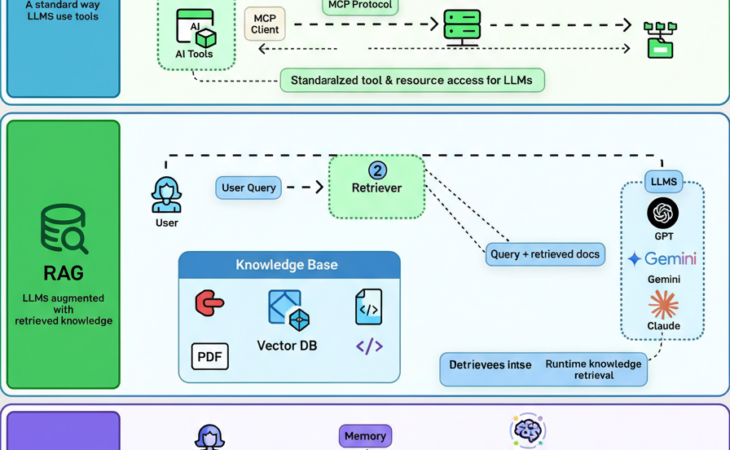
MCP vs RAG vs AI Agents Discussions around Model Context Protocol (MCP), Retrieval-Augmented Generation (RAG), and AI Agents are prevalent. Often, these concepts are mistakenly conflated. However, they do not represent competing ideas; instead, they address distinct challenges at various levels of the technical stack. The Model Context Protocol (MCP) defines the mechanism through which

Read More